

Description
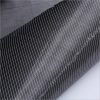
Double Bias Carbon Fibre Cloth 400gsm
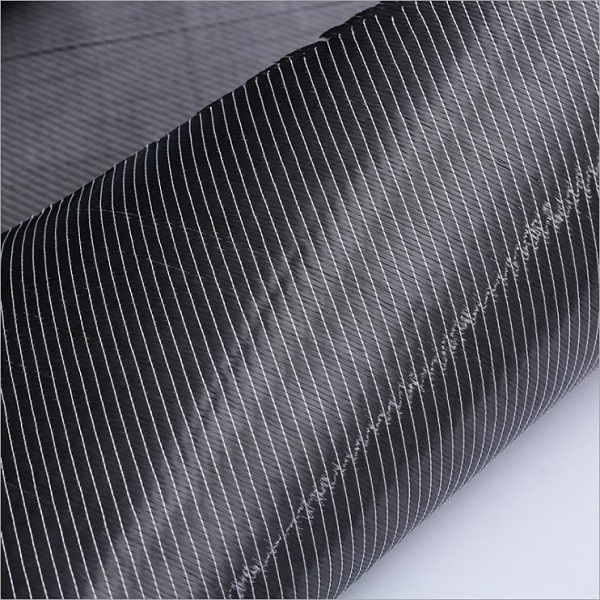
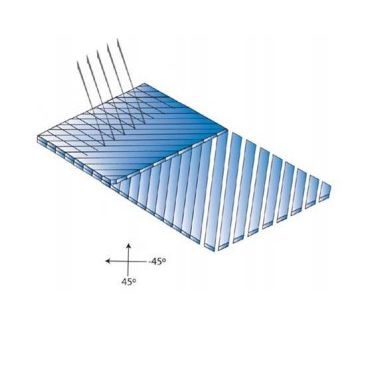
Double bias carbon fibre cloth 400gsm is a stitched carbon fabric with the fibres laid at ±45° to the roll length. That puts the strength in the diagonal directions, so it carries shear and torsion far better than a 0/90 weave. It suits wet layup, vacuum bagging and infusion. Sold by the lineal metre.
At a glance
| Spec | Value |
|---|---|
| Fibre | Carbon |
| Construction | Double bias (biaxial), stitched |
| Fibre orientation | +45° / -45° |
| Areal weight | 400gsm (400g per m² dry) |
| Resin compatibility | Epoxy, vinyl ester and polyester |
| Sold as | Per lineal metre |
| Cured thickness per layer | About 0.4mm (indicative) |
Why choose double bias carbon fibre cloth 400gsm?
Strength where a 0/90 weave is weak
Loads from twisting and shear run at 45° to a tube or beam. Fibres laid at ±45° meet them directly, so a layer resists torsion and shear far better than a woven cloth at 0/90.
Stitched, not woven
The two fibre layers are held by stitching rather than woven over and under. There is no crimp, so the fibre is straight and carries load efficiently. It also lies flat and wets out well.
Heavy build in few layers
At 400gsm each layer is thick, so you reach the laminate thickness you need with fewer plies.
Where double bias carbon fibre cloth fits
Choose this, or choose the neighbour
- Choose a 0/90 woven cloth, such as our plain weave 3k 240gsm, for cosmetic surfaces and bending loads.
- Choose unidirectional fabric when the load runs in one direction.
- Choose a lighter double bias for thin skins and tight curves.
Worked example
A 1m x 1m piece weighs about 400g dry. Four layers add about 1.6kg of cloth per m² and a laminate roughly 1.6mm thick. Indicative only. Resin, process and pressure change these figures.
Using the fabric
Suits vacuum bagging, wet layup and infusion with epoxy, vinyl ester or polyester resin. Epoxy is the usual choice for best performance. Cut with sharp shears, keep the fibres at the angle you want, and wear gloves and a dust mask. See our adhesives and resins range.
Applications
This cloth suits these jobs.
- Tubes and shafts: wrapping for torsional stiffness
- Hulls and boards: shear skins and reinforcement
- Automotive and motorsport: structural panels
- Repairs: strengthening cracked or twisted parts
- Laminate stacks: the ±45° layers alongside 0/90 plies
Specifications
| Property | Specification |
|---|---|
| Fibre | Carbon |
| Construction | Double bias, stitched |
| Orientation | +45° / -45° |
| Areal weight | 400gsm |
| Resin compatibility | Epoxy, vinyl ester and polyester |
| Sold as | Per lineal metre |
| Cured thickness per layer | About 0.4mm (indicative) |
Frequently asked questions about double bias carbon fibre cloth
What does double bias mean?
Two layers of fibre at +45° and -45°, stitched together.
Is it better than woven cloth?
For torsion and shear, yes. For cosmetic finish, woven looks better.
Which resins can I use?
Epoxy, vinyl ester and polyester.
Related products
Related products

Double Bias
Double Bias

Double Bias
Double Bias
Double Bias