

Description
Double Bias Carbon Fibre 150gsm
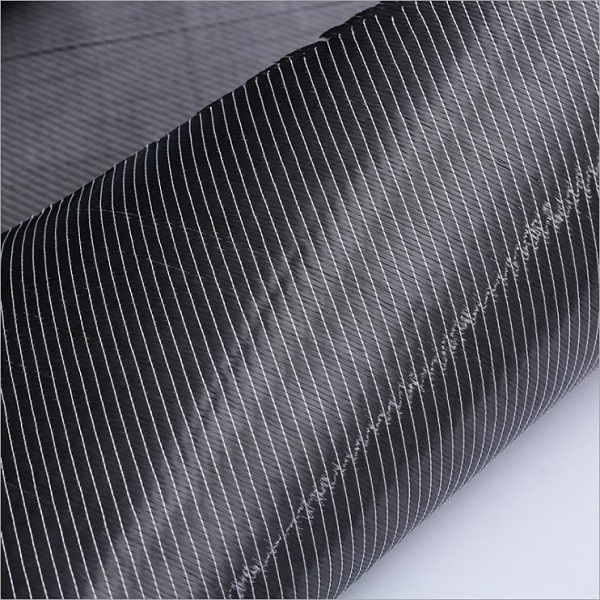
Double bias carbon fibre 150gsm is a stitched carbon fabric with the fibres laid at ±45° to the roll length. That puts the strength in the diagonal directions, so it carries shear and torsion far better than a 0/90 weave. It suits wet layup, vacuum bagging and infusion. Sold by the lineal metre.
At a glance
| Spec | Value |
|---|---|
| Fibre | Carbon |
| Construction | Double bias (biaxial), stitched |
| Fibre orientation | +45° / -45° |
| Areal weight | 150gsm (150g per m² dry) |
| Resin compatibility | Epoxy, vinyl ester and polyester |
| Sold as | Per lineal metre |
| Cured thickness per layer | About 0.15mm (indicative) |
Why choose double bias carbon fibre 150gsm?
A light, flexible weight
At 150gsm each layer is thin enough to follow tight curves and small tubes, yet it builds strength faster than our 100gsm cloth. It suits thin skins, drone and model parts and weight-critical laminates.
Strength where a 0/90 weave is weak
Twisting and shear loads run at 45° to a tube or beam. Fibres laid at ±45° meet them directly, so a layer resists torsion and shear far better than a woven cloth at 0/90.
Stitched, not woven
The two fibre layers are held by stitching rather than woven over and under. There is no crimp, so the fibre is straight and carries load efficiently. It lies flat and wets out well.
Where double bias carbon fibre 150gsm fits
Choose this, or choose the neighbour
- Choose our double bias 100gsm for the thinnest layers and finest control of thickness.
- Choose our double bias 310gsm or 400gsm to build thickness faster.
- Choose a 0/90 woven cloth, such as our plain weave 3k 240gsm, for cosmetic surfaces and bending loads.
Worked example
A 1m x 1m piece weighs about 150g dry. Eight layers add about 1.2kg of cloth per m² and a laminate roughly 1.2mm thick. Indicative only. Resin, process and pressure change these figures.
Using the fabric
Suits vacuum bagging, wet layup and infusion with epoxy, vinyl ester or polyester resin. Epoxy is the usual choice for best performance. Handle gently, because light stitched cloth distorts easily. Cut with sharp shears, and wear gloves and a dust mask. See our adhesives and resins range.
Applications
This cloth suits these jobs.
- Small tubes and shafts: thin wraps for torsional stiffness
- Drones and models: light shear skins
- Boards and sporting goods: thin reinforcement layers
- Repairs: fine patches over curves
- Laminate stacks: light ±45° plies alongside 0/90 layers
Specifications
| Property | Specification |
|---|---|
| Fibre | Carbon |
| Construction | Double bias, stitched |
| Orientation | +45° / -45° |
| Areal weight | 150gsm |
| Resin compatibility | Epoxy, vinyl ester and polyester |
| Sold as | Per lineal metre |
| Cured thickness per layer | About 0.15mm (indicative) |
Frequently asked questions about double bias carbon fibre 150gsm
What does double bias mean?
Two layers of fibre at +45° and -45°, stitched together.
Which weight should I choose?
100gsm for the thinnest parts, 150gsm for light general use, 310gsm or 400gsm for fast build-up.
Which resins can I use?
Epoxy, vinyl ester and polyester.
Related products
- Double bias carbon fibre 100gsm
- Double bias carbon fibre 310gsm
- Double bias carbon fibre cloth 400gsm
- Adhesives and resins
Related products

Double Bias
Double Bias

Double Bias
Double Bias
Double Bias